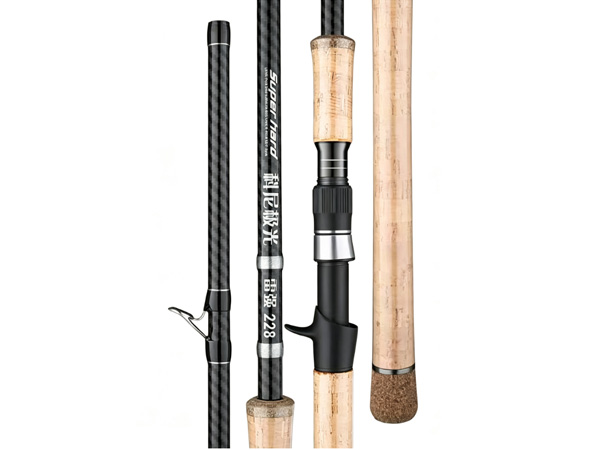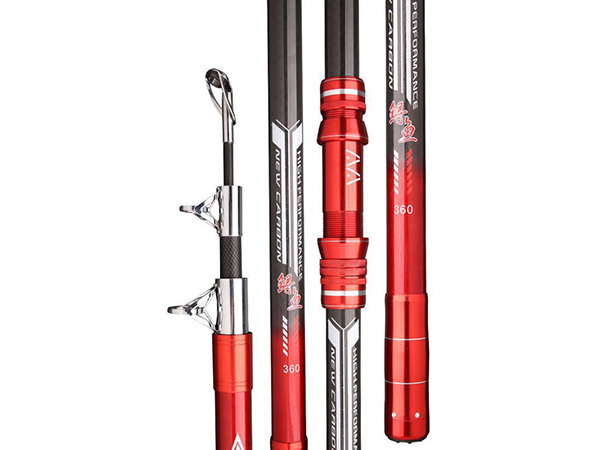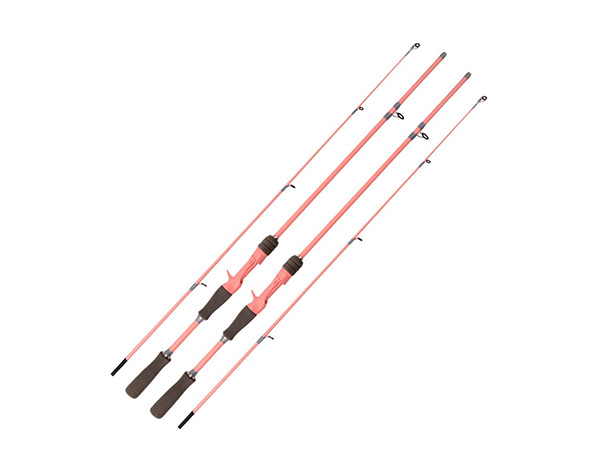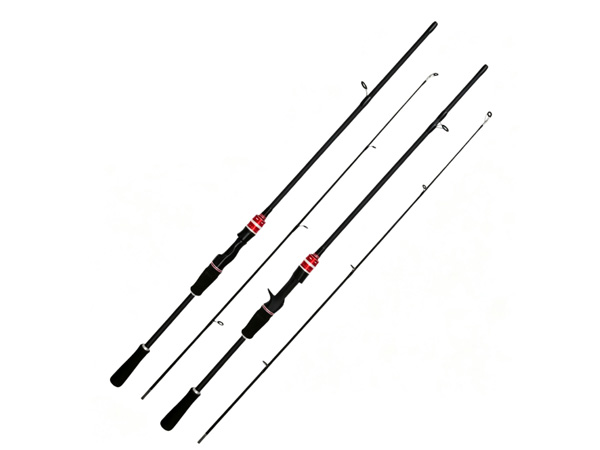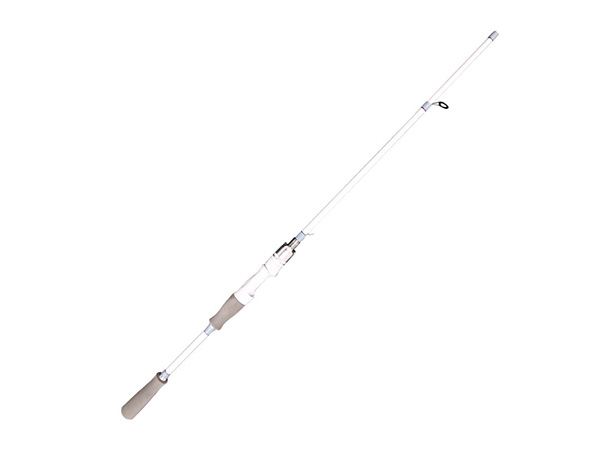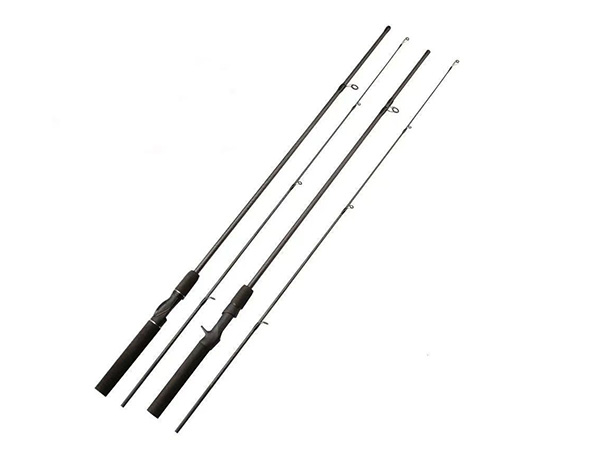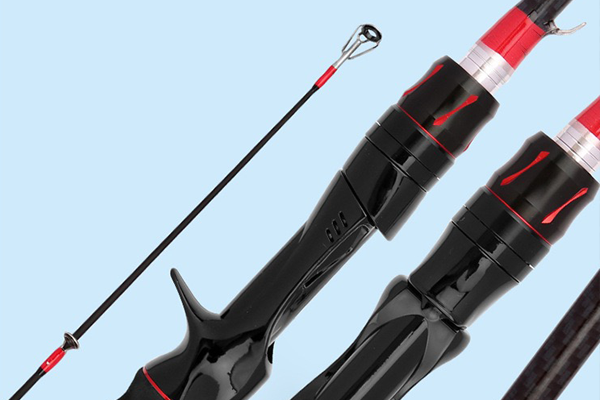






Baitcasting Lure Rod: Fast Action Carbon Rod for Freshwater Fishing
For anglers who demand precision, power, and responsiveness in freshwater predator fishing, the baitcasting lure rod remains the tool of choice. Unlike spinning gear, baitcasting reels sit atop the rod, aligning the line with the rod's axis for superior casting accuracy and direct mechanical advantage. When that platform is built on a fast-action carbon blank, the result is a fishing rod that transfers energy efficiently, sets hooks with authority, and handles heavy cover without hesitation.
This article breaks down the engineering behind fast-action baitcasting lure rods, compares action classifications, evaluates carbon fiber construction, and provides practical guidance for selecting and pairing the right rod for your freshwater applications—from bass in flooded timber to northern pike along weed edges.
What Is a Baitcasting Lure Rod?
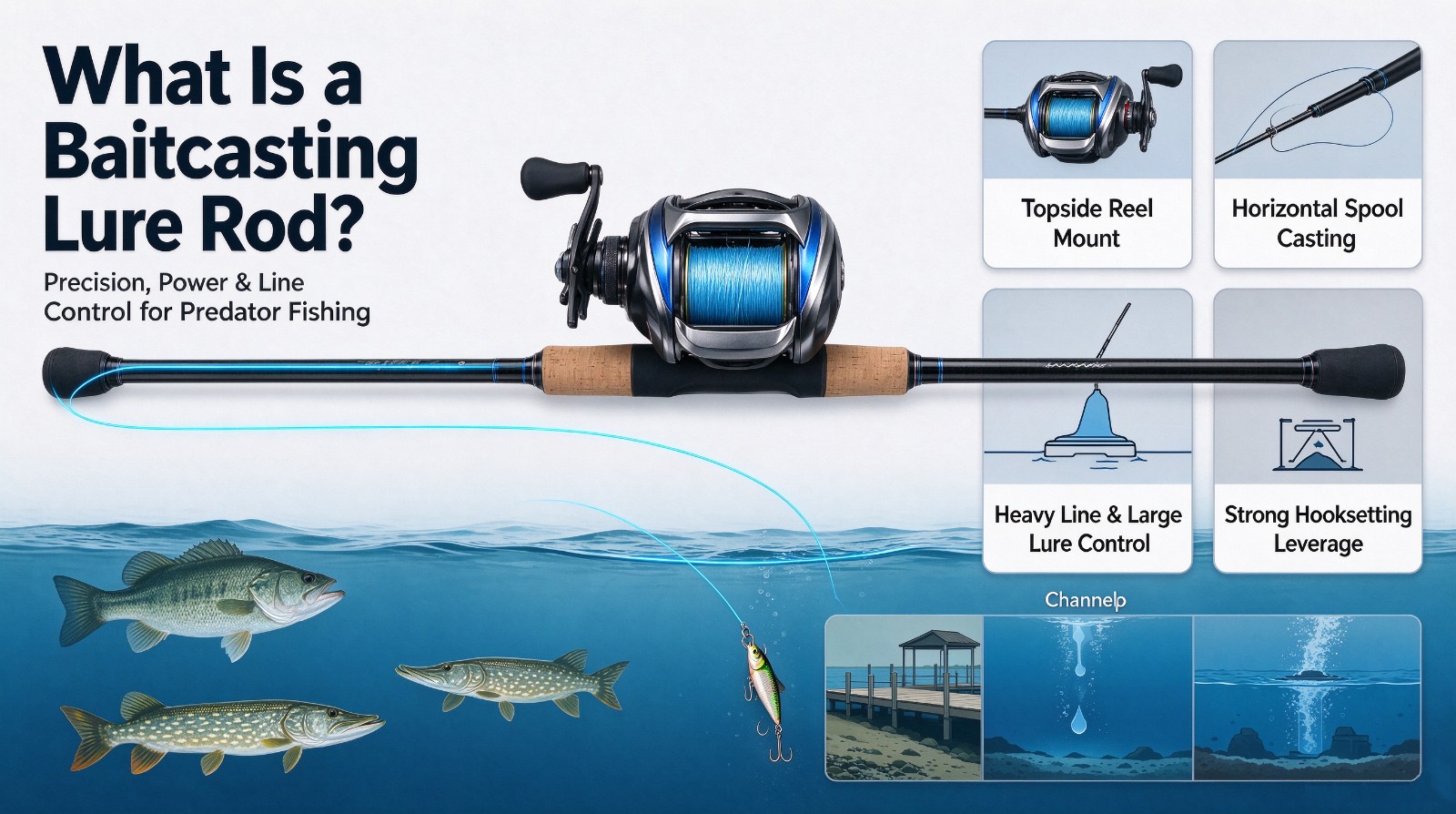
A baitcasting lure rod is a fishing rod specifically engineered to pair with a baitcasting reel. The reel mounts on the topside of the rod blank, and the spool rotates horizontally during the cast, allowing for precise control over lure placement and drag settings. Baitcasting setups are preferred by experienced anglers because they offer:
Improved accuracy over longer distances, critical when targeting specific cover, dock pockets, or channel drops.
Superior line management for heavier lines and larger lures commonly used in predator fishing.
Direct hook-setting power transferred from the angler's wrist through the rod to the hook.
Enhanced sensitivity due to the reel's direct contact with the blank and the exposed spool design.
For freshwater applications—particularly bass, walleye, and northern pike—a baitcasting rod provides the mechanical leverage needed to drive hooks through tough mouths and pull fish away from heavy structural cover.
Fast Action: What It Means Mechanically
Rod action describes where a rod flexes under load and how quickly it returns to neutral. In common industry usage, fast action refers to a rod that flexes primarily in the upper third to one-half of the blank when loaded. A fast-action rod delivers:
Rapid energy transfer from tip to butt during the casting stroke and hook set.
Stiff-rear section for solid lifting power when fighting fish in heavy cover.
Precise tip sensitivity to detect light bites and bottom contact.
Quick recovery, reducing vibration and wobble during the cast.
Fast Action vs. Extra Fast Action: Key Differences
Distinguishing between fast action and extra fast action is critical for selecting the right rod:
Fast action: Flex zone in the upper third to midpoint of the blank. High tip sensitivity with strong mid-to-butt section. Ideal for jerkbaits, spinnerbaits, and general-purpose bass fishing.
Extra fast action: Flex zone limited to the top quarter or less. Maximum tip sensitivity and explosive, immediate hook-setting. Ideal for flipping, pitching, jig fishing, and heavy cover situations.
Extra-fast-action rods sacrifice some mid-blank flex for an even stiffer backbone and a tip that barely bends. Fast-action rods offer a balanced compromise, making them the more versatile choice for multi-technique freshwater anglers.
Carbon Fiber Construction: Modulus, Layup, and Blank Performance
The term carbon fishing rod freshwater refers to a rod whose blank is constructed primarily from carbon fiber-reinforced polymer (CFRP). The performance characteristics of a carbon rod are determined by three interrelated factors:
Fiber Modulus
Carbon fiber modulus measures stiffness. Higher-modulus fibers are thinner and stiffer, transmitting vibration faster but with less resilience to impact shock. Lower-modulus fibers offer greater flex memory and durability under load. Most quality freshwater baitcasting rods use a blend of IM6, IM7, or higher-modulus graphite in the mandrel layup, with strategic use of high-strength (HS) fibers in high-stress zones near the ferrule and handle seat.
Layup Pattern
The way carbon fibers are oriented and layered—unidirectional, cross-woven, or 3K/12K weave—determines torsional stiffness, hoop strength, and weight. Modern baitcasting rods commonly use a combination of unidirectional graphite for longitudinal stiffness and bi-axial or tri-axial wraps at 45-degree angles to resist twisting under load. This hybrid approach balances sensitivity, power, and weight.
Blank Wall Thickness and Taper
A fast-action blank typically features a tapered parabolic design that concentrates flex in the tip while maintaining a robust wall thickness in the butt section. This design philosophy supports both the casting dynamics (requiring tip flex) and the fish-fighting demands (requiring a rigid backbone).
Why Freshwater Anglers Prefer Baitcasting Rods
The preference for baitcasting over spinning gear in freshwater predator fishing stems from practical performance advantages:
Heavy lure capacity: Baitcasting reels handle lures from 1/4 oz to over 2 oz without spool performance degradation common in spinning reels.
Line diameter and strength: Braided lines in the 30–80 lb range perform reliably on baitcasting reels, which is standard for flipping, punching, and heavy cover applications.
Precision casting: The thumb-controlled spool allows the angler to place a lure within inches of a target, which matters when fishing docks, laydowns, and pinpoint targets in heavy cover.
Mechanical advantage: The reel's position above the blank and the direct connection to the rod's backbone provide better cranking power when pulling a large fish away from structure.
Key Applications for Baitcasting Rods in Freshwater
Flipping and Pitching
Flipping and pitching are short-range, high-accuracy presentations used to place baits under docks, into dense vegetation, and around submerged timber. These techniques demand a heavy cover fishing rod — typically extra-heavy power with a moderate or moderate-fast action — that can drive a hook through thick cover and horse a fish out quickly before it can wrap the angler in structure. A fast-action medium-heavy rod covers lighter flipping applications and smaller cover effectively.
Jig Fishing
Jig fishing around rocks, riprap, and channel swings demands a rod that transmits bottom contact clearly and drives a single hook set through a bass's mouth. A medium-heavy to heavy-power, fast-action baitcasting rod is the standard configuration for this technique. The sensitive tip detects the subtle "tick" of a jig bumping bottom, and the stiff backbone drives the hook home without wasted motion.
Jerkbait Fishing
Pause-and-walk jerkbait techniques require a rod with enough tip action to work the lure with a wrist snap while maintaining contact to set the hook on a reflexive strike. A medium-power, fast-action baitcasting rod for bass allows the angler to impart an aggressive darting action while maintaining the direct connection needed to detect and capitalize on strikes during the pause.
Topwater Frog and Walking Bait
Frog fishing over dense mats of hydrilla, lily pads, or floating debris calls for a heavy-power, fast-action rod that can set a single frog hook through a thick body while also absorbing the explosive surface strikes these lures provoke. The rod must have enough backbone to drive the hook and enough tip softness to allow the frog to work naturally without being pulled below the surface prematurely.
Reel Pairing Recommendations for Baitcasting Setups
Pairing the right reel with a baitcasting lure rod is as important as the rod itself. Key considerations:
Gear ratio: Low-ratio reels (6.3:1–7.1:1) provide more torque for cranking heavy baits and pulling fish from cover. High-ratio reels (8.1:1+) are faster for burning baits and burning slack. A 7.1:1 to 7.5:1 ratio is a versatile mid-point for most freshwater bass applications.
Braking system: Modern baitcasting reels feature magnetic or centrifugal brakes that reduce spool overrun. For beginners, a reel with an adjustable magnetic brake provides fine-tuned control during the learning phase.
Drag system: A smooth, adjustable drag in the 15–20 lb range is adequate for most freshwater predator applications. For large pike or muskie, look for heavier drag capacity.
Line capacity: Ensure the reel's spool accommodates the line weight and type you intend to use. High-capacity spools are important for braid-heavy flipping applications.
Line Compatibility: Braid, Fluorocarbon, Monofilament
Baitcasting reels handle all common fishing line types effectively, but each has distinct characteristics:
Braid: Zero stretch, small diameter for its strength, and excellent sensitivity. The standard choice for flipping and punching in heavy cover. Requires a slip or an underwind to prevent dig-in on the spool.
Fluorocarbon: Less visible underwater than mono, more abrasion-resistant, and sinks faster. A good main line or leader for clear-water jerkbait and finesse jig applications.
Monofilament: More forgiving of spool management errors, absorbs shock well, and is easier to manage for beginners. A reasonable choice for general casting applications where maximum sensitivity is not required.
Guide Selection for Baitcasting Rods
Baitcasting rod guides are mounted on the top of the blank. The first guide (foot) must be positioned precisely to align the line path directly over the reel's spool. Key guide considerations:
Frame material: Stainless steel or titanium frames resist corrosion for freshwater use. Titanium is lighter but more expensive.
Insert material: Hard chrome, Alconite, or silicon carbide (SiC) inserts provide smooth line flow. SiC is the most expensive and offers the lowest friction, which matters at longer casting distances.
Foot guide size: Must be large enough to accommodate the largest line diameter used (typically braid or heavy fluoro) without binding.
Common Mistakes When Selecting Baitcasting Rods
Choosing a rod that is too stiff for the technique: An extra-heavy, extra-fast rod is not the best choice for a jerkbait or a walking bait. Match power and action to the specific technique.
Ignoring the reel seat: A loose or worn reel seat causes the reel to shift during use, affecting casting accuracy and fish-fighting control. Check the seat's grip and hood integrity before each outing.
Underestimating the importance of balance: A baitcasting reel that is too heavy for the rod creates a tip-heavy setup that causes fatigue and reduces casting accuracy. The combined setup should feel neutral in the hand.
Using line that exceeds the rod's rating: A rod rated for 10–20 lb line should not be used with 40 lb braid as a primary line unless it is specifically rated for that class.
Maintenance and Longevity
Proper care extends the functional life of a baitcasting rod significantly. Rinse the rod thoroughly after use, especially after fishing in stained or mineralized water. Periodically check that all guide frames are secure and that inserts are not cracked or chipped. Lubricate the reel seat threads and check the hood engagement. Store the rod in a rod case or rack that supports it along its length rather than concentrating pressure on the tip or handle. Avoid prolonged exposure to high temperatures, which degrades the resin bonds in the carbon fiber blank.
Conclusion
The baitcasting lure rod is a precision instrument built for freshwater predator fishing. Its fast-action carbon construction delivers the sensitivity, hooks-setting authority, and durability that serious freshwater anglers require. The platform's compatibility with heavy lures, braided lines, and high-torque reels makes it indispensable for flipping, pitching, jig fishing, and any technique where accuracy and power outweigh the simplicity of a spinning setup.
For B2B buyers sourcing freshwater predator rod inventory, prioritizing fast-action carbon baitcasting rods in medium-heavy to heavy power ratings covers the widest range of customer demand. Pairing those rods with reels that feature reliable drag systems and adjustable braking makes the setup accessible to anglers across experience levels.
FAQ
What is the difference between fast action and extra fast action on a baitcasting rod?
Fast action rods flex in the upper third to midpoint of the blank, providing a balance of sensitivity and mid-section backbone. Extra fast action rods flex only in the top quarter or less, maximizing tip sensitivity and immediate hook-setting power at the cost of some forgiveness in the mid-blank. Extra fast is preferred for precision techniques like flipping and jigging; fast action is more versatile for multi-technique anglers who want one rod to handle several lure types.
Can a baitcasting rod be used with light lures?
Yes, baitcasting rods can cast light lures, but they are less forgiving than spinning rods in that application. Lures below roughly 1/4 oz become difficult to cast accurately on a baitcasting reel because the slow spool rotation makes the system prone to overrun and backlashes. For presentations requiring lures under 1/4 oz, a spinning setup is typically the better choice. Baitcasting excels with lures of 3/8 oz and heavier.
What carbon fiber grade is best for freshwater baitcasting rods?
IM7 carbon fiber is a common choice for performance freshwater baitcasting rods, offering a good balance of sensitivity, weight, and durability. IM8 provides lighter weight and faster recovery but at higher cost and with reduced impact resistance. IM6 is the most durable and affordable but heavier. For most freshwater bass applications, IM7 represents the practical sweet spot between performance and durability.
How often should I replace my baitcasting rod?
There is no fixed replacement interval. Inspect the rod before each season: check the blank for cracks or delamination, verify guide alignment, and ensure the reel seat grips firmly. A rod that passes inspection can last many seasons of regular use. Replace when you observe visible cracks in the blank, loose guides that cannot be tightened, or a reel seat that no longer secures the reel properly.
What should I look for when buying baitcasting rods in bulk for retail?
Key evaluation criteria include: consistent power and action ratings across production batches (request samples), quality of guide inserts and frame construction, reel seat security and durability, blank taper consistency, and finish quality. Verify that the supplier provides accurate specifications and can maintain consistent quality across repeat orders. Offering a range from medium-light to extra-heavy power, in both fast and extra-fast actions, covers the broadest customer base.
References
Lee, C.K. and Singh, M. (2004). "Analysis of fishing rod design using composite materials." Sports Engineering, Vol. 7, No. 4, pp. 201–211. DOI: 10.1007/s10270-004-0056-1.
American Sportfishing Association. (2025). State of the Industry Report: Fishing Equipment Trends and Market Analysis. American Sportfishing Association, Alexandria, VA.
International Organization for Standardization. (2018). ISO 7542:2018 — Fishing Equipment — Fishing Rods — Safety Requirements and Test Methods. ISO, Geneva.
AWAIR Project (European Union). (2021). "Advanced Composites in Recreational Marine Equipment: Performance and Environmental Impact." European Commission Research Results, EUR 30542 EN.
Browse the full range of baitcasting lure rods at Cangfeng designed for freshwater bass and predator fishing.