





BLOGSDETAILS
What is heavy duty telescopic snagging rod for?
Author:cangfeng Time:2026-08-24 11:05:10 Click:77
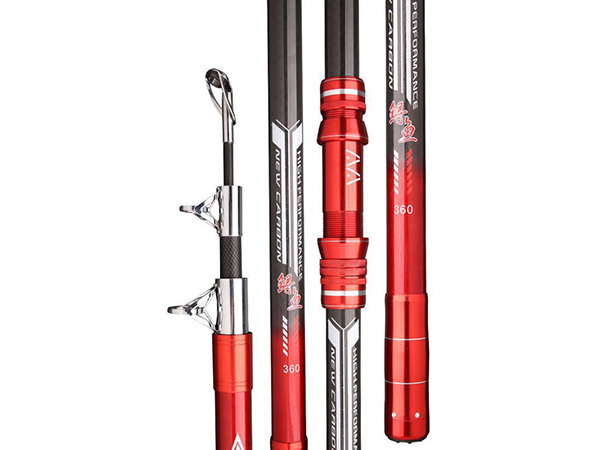
Heavy‑duty telescopic snagging rods are high‑strength collapsible fishing tools built to withstand extreme pulling force,distinguished by reinforced thick‑wall blanks,strengthened locking joints and heavy‑load‑rated hardware.Unlike general‑purpose surf or lure rods focused on casting distance and bite sensitivity,these specialized rods prioritize raw lifting power and anti‑shock performance.Their telescopic structure delivers convenient portability for travelling to remote shore fishing locations,while their heavy‑duty construction handles high‑stress operations that would easily damage ordinary fishing rods.They serve multiple practical angling scenarios across large freshwater reservoirs,river dams,rocky coastal zones and pier environments,though they follow strict usage limits and are not designed for delicate bite‑detecting fishing styles.
One core application is heavy‑load foul‑hooking angling for large‑bodied fish.Many big fish such as giant catfish,large carp and sturgeon‑like species stay close to underwater obstacles including submerged trees,rock piles and dam outflow structures.Anglers equip snagging rods with large treble hook rigs to target these heavy fish.Once the hook makes contact with the fish’s body,the rod must generate massive pulling force to drag powerful prey away from underwater shelters and stop them from rushing into rock crevices which cut fishing lines.Standard fishing rods will bend excessively or crack under such sudden violent surges,yet reinforced telescopic snagging rods maintain stable structural integrity under huge instant tension.The collapsible design allows anglers to hike along long river banks and dam edges without transporting bulky one‑piece heavy gear.
Beyond targeting large fish,heavy‑duty telescopic snagging rods excel at retrieving snagged tackle.Underwater rocks,sunken branches and reefs frequently trap sinkers,hooks and lures.When terminal tackle gets firmly stuck on submerged obstacles,regular rods will risk blank fracture if anglers yank hard.The heavy‑duty snagging rod absorbs sharp shock during forceful pulling,giving users enough strength to free stuck rigs or break lines in controlled fashion,saving expensive lures and terminal gear.In rock‑filled saltwater shore environments,anglers also deploy these rods to pull fishing lines free from jagged reef structures,a common frustration for coastal rock‑fishing enthusiasts.
These rods are also adopted for auxiliary shore‑based fishing operations.Some anglers use them for heavy bottom fishing targeting oversized inshore saltwater fish around breakwaters and reef zones.They can handle extremely heavy sinkers required for deep near‑shore bottom fishing,holding rigs steady against strong river currents or powerful coastal wave surges.Thanks to the telescopic mechanism,users can shorten the rod quickly when operating in confined spaces such as narrow pier walkways,and fully extend it when extra reach is needed.It should be noted that these rods sacrifice tip sensitivity for backbone strength.Their stiff blanks are not suitable for detecting subtle bites of small‑size fish,so they cannot replace lightweight stream or general‑purpose spinning rods for ordinary recreational angling.
Proper operation is critical to extend service life.Even heavy‑duty telescopic snagging rods have marked maximum load limits.Continuous brute‑force yanking far beyond rated pressure will still cause joint deformation or blank breakage.Sand and grit easily gather inside nested segments during shore fishing;users must clean joint surfaces before retraction to avoid internal abrasion.For saltwater usage,thorough fresh‑water rinsing of metal guides and reel seats is required after each trip to prevent salt‑induced corrosion.High‑grade models adopt thick carbon composite blanks and double‑reinforced joints,while low‑cost versions may suffer joint loosening after repeated heavy pulling.
In summary,heavy‑duty telescopic snagging rods are mainly built for foul‑hooking large freshwater and inshore saltwater fish,recovering snagged fishing tackle,and heavy‑weight bottom fishing in high‑current complex‑structure waters.The telescopic design improves mobility for shore anglers visiting remote fishing sites.They represent specialized high‑power gear instead of all‑round daily fishing equipment.Users must operate within load specifications and complete regular cleaning maintenance to avoid premature equipment failure.
References
1.GB/T 7714‑2015 Format
[1]OKAMOTO H,KURODA S.Structural Analysis of High‑Load Telescopic Fishing Rods for Snag‑Resistant Shore Angling[J].Sports Engineering,2022.[2026‑08‑24].
2.APA‑7th Format
Okamoto,H.,&Kuroda,S.(2022).Structural analysis of high‑load telescopic fishing rods for snag‑resistant shore angling.Sports Engineering.
3.MLA‑9th Format
Okamoto,Haru,and Satoshi Kuroda.“Structural Analysis of High‑Load Telescopic Fishing Rods for Snag‑Resistant Shore Angling.”Sports Engineering,2022,
 HOT PRODUCT
 CONTACT US